
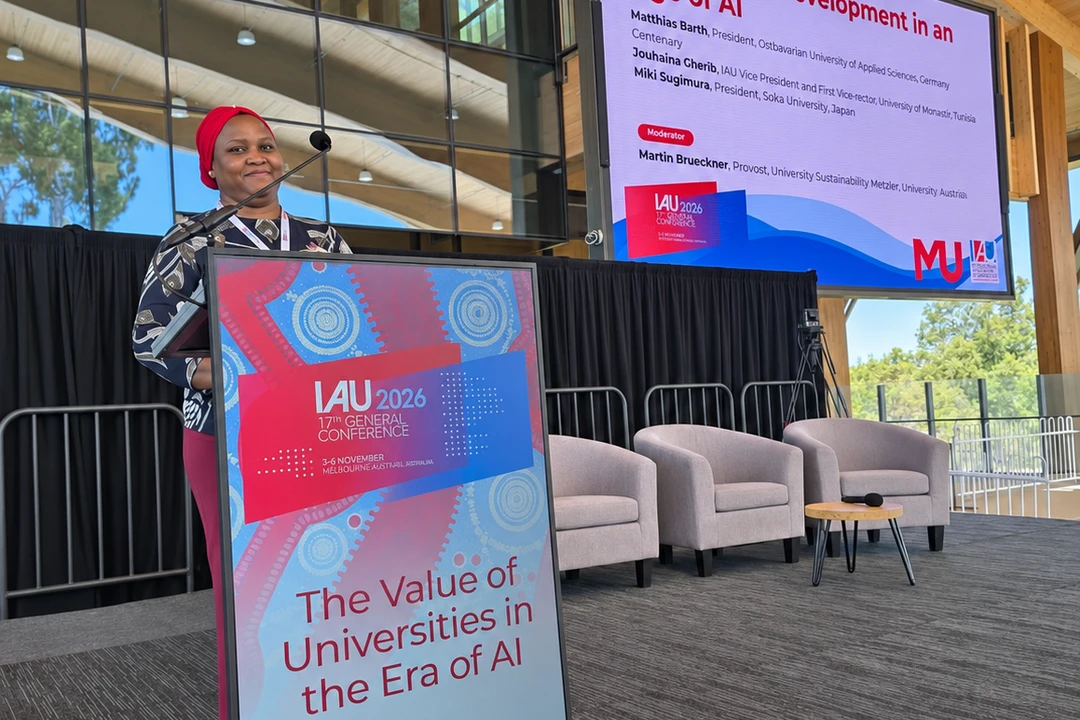
Ms. Rashida Kateregga Calls for Human Judgment to Guide AI in Universities
Ms. Rashida Kateregga, Kampala University’s Resident Director and Vice-Chairperson of the Board of Trustees, has called for universities to put empathy, ethical judgment and creativity at the centre of how they use artificial intelligence. Her recommendations include redesigning student assessments, setting rules for responsible AI use and investing in research that reflects African languages and knowledge.
Ms. Rashida represented Kampala University at the 17th General Conference of the International Association of Universities (IAU), hosted by Murdoch University in Perth, Australia, from 3 to 6 November 2026. Under the theme “The Value of Universities in the Era of Artificial Intelligence,” university leaders, researchers and policymakers examined how AI is changing teaching, research and governance.
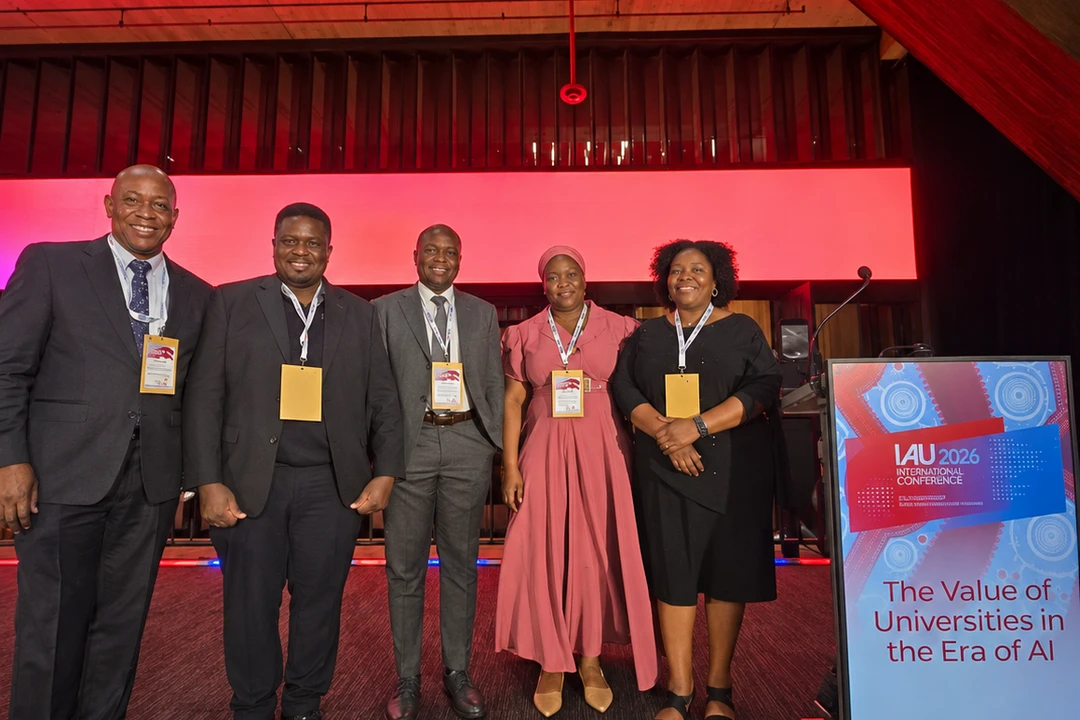
In her presentation, “Human Touch in an AI-Driven Era,” the KU Resident Director drew on the Perth discussions to address a practical question for lecturers. When AI can produce a polished answer in seconds, how can they tell whether a student understands the subject well enough to defend an argument or apply what they have learned?
She proposed greater use of oral defences and practical assignments, clearer disclosure of AI-assisted work and regular review of assessment practices. She also emphasised the role of lecturers and mentors in recognising when students are struggling and providing guidance tailored to their needs.
Governing AI and Protecting Local Knowledge
The KU RD highlighted the AI governance specialist Rachel Adams’s concerns about universities’ dependence on a small number of technology providers and the dominance of English-language and Western-centred datasets. She proposed a framework for AI governance and ethics, subject to Board approval, to guide responsible use, protect institutional data and hold providers and users accountable.
She called for investment in African-centred research and partnerships that preserve indigenous knowledge and support the inclusion of Ugandan languages. She identified agriculture, public health and climate resilience as areas where locally grounded research could help universities develop AI applications that respond to community needs.
From Perth to Kampala University
Ms.Rashida linked her proposals to Kampala University’s 2026–2030 strategic priorities. She recommended a university-wide review of teaching and assessment to examine how programmes develop critical thinking, creativity, ethical judgment and practical problem-solving. She also proposed integrating digital literacy, privacy and digital rights into academic programmes and student development, drawing on the conference discussion of UNESCO’s digital citizenship objectives.\

She talked about the proposal of establishing the Kampala University Innovation Bridge, an incubator to help students and academic staff develop ideas that address community challenges. She recommended research partnerships to build local expertise and connect the University with regional innovation networks. In agriculture, for instance, such collaboration could start with a problem identified by farmers and bring researchers and students together to assess where AI could help.
Ms. Rashida also proposed regular forums bringing together management, staff, students, alumni and industry partners to guide implementation. Lecturers and students could identify where course requirements and guidance on AI use need to be clearer, while employers could advise on the digital skills and judgment graduates will need at work.
Her recommendations place responsibility for AI use in everyday university practice, from how a lecturer designs an assignment to how a research team chooses a tool. For students, that means learning to verify evidence, explain their decisions and stand behind the work they submit or share with a community partner.
By Ssekatawa Julius Abubakar
P.R.O., Kampala University